
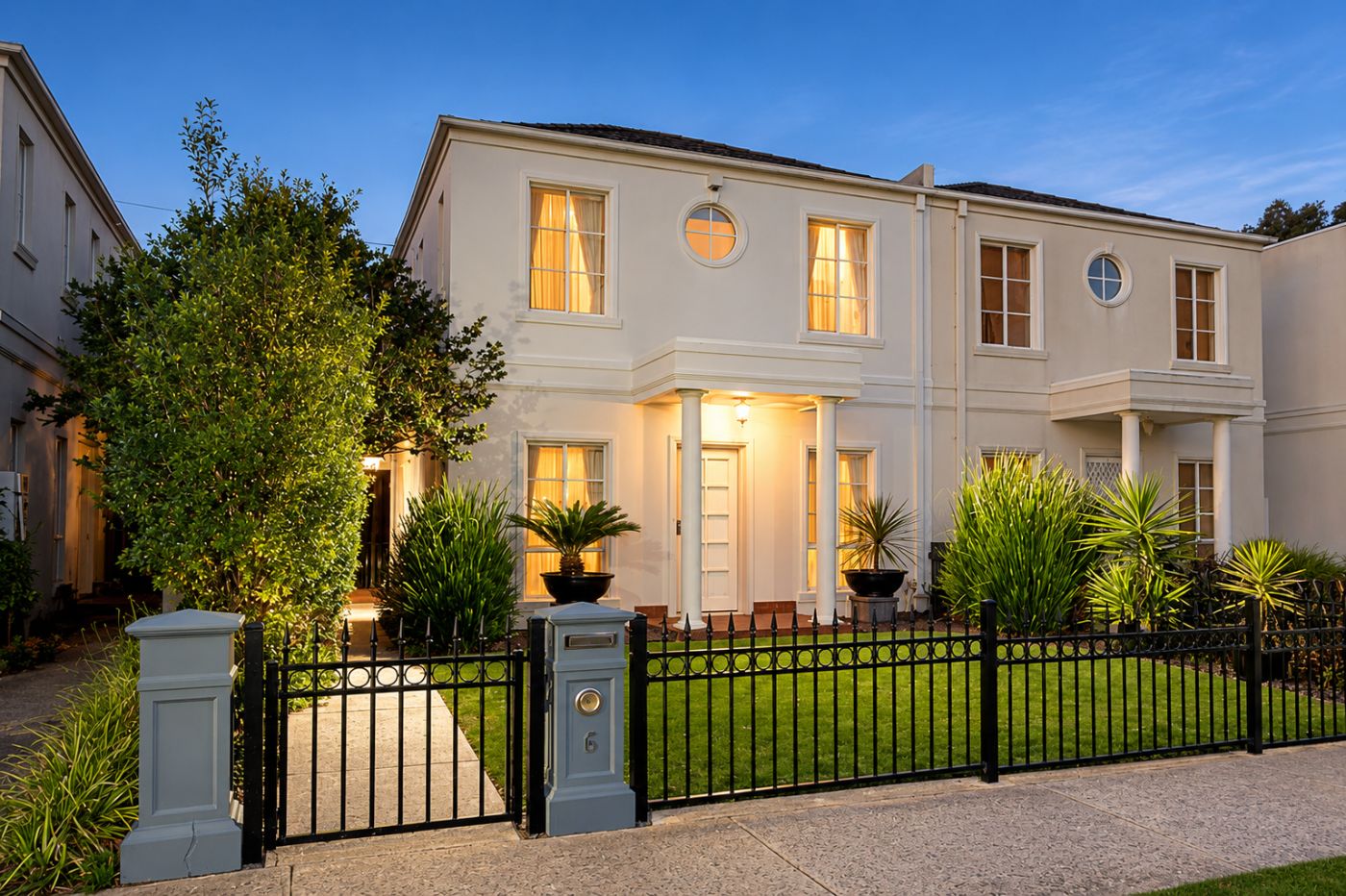
Philip and Eva had been searching for a home for some time when two properties came onto the market on the same street. The homes were only a couple of doors apart and were essentially the same design, which gave them two very comparable options.
They liked both properties, but there was a clear preference. The first property felt like the better home for them, and fortunately it was also scheduled to go to auction first. The second property was going to auction the following weekend, which meant that if we couldn't secure their preferred property on the right terms, we had a very credible alternative.
Before auction day, I had assessed the preferred property as being worth somewhere in the vicinity of $920,000 to $950,000. Philip and Eva had also given me authority to go as high as $970,000 if that was what was required to secure it.
That distinction is important. My clients had told me what they were capable and comfortable paying. My job wasn't to spend up to that number. My job was to secure the property for them on the best terms possible.
On auction day there was genuine competition, but eventually the bidding stalled with me holding the highest bid at $890,000. The property hadn't reached the vendor's reserve, so it was passed in to us, giving Philip and Eva the first opportunity to negotiate with the vendor.
At that point, there can be an enormous amount of pressure on a buyer. You've just competed publicly for a property you really want, you're the highest bidder, and the selling agents want to get you inside and begin negotiating as quickly as possible. I deliberately didn't do that.
I went over to Philip and Eva and told them there was no rush. We stood outside for a few minutes, talked through what had happened and allowed the situation to settle. I didn't want us rushing through the door looking desperate to buy. We were in a strong negotiating position, and I wanted our behaviour to reflect that.
When we eventually went inside, the auctioneer told us that the vendor's reserve had been $1 million, but that the vendors had already reduced their expectations and would sell the property to us for $950,000. The interesting part was that Philip and Eva would have paid it.
They had authorised me to spend up to $970,000, and $950,000 was within the range I had placed on the property. Had they been negotiating for themselves, that could very easily have been the end of the conversation. But the selling agents didn't know our limit, and there was no reason for us to negotiate against ourselves.
Philip and Eva were prepared to pay $950,000. But the selling agent didn't know that, and there was no reason for us to tell them.
I told the auctioneer that we weren't going to get anywhere near $950,000. The best I was prepared to do was put a nine in front of our offer. We offered $900,000.
The auctioneer went back to the vendors and eventually returned with another proposal. The vendors had moved again and were now prepared to sell for $925,000, effectively trying to meet us halfway. Again, Philip and Eva could comfortably have paid it.
But by this point, the information I had gathered throughout the campaign became particularly important.
I knew the vendors had already purchased another property and needed to sell this one. I knew that a nearly identical property just a couple of doors away was going to auction the following weekend. And we had just watched the open market test this property in real time: despite competitive bidding, nobody had been prepared to bid beyond our $890,000 offer.
So I held our position. I explained to the auctioneer that the market had just had an opportunity to determine the price. If there had been a buyer prepared to pay $920,000, $950,000 or more, they could have bid that amount outside. They hadn't.
If another buyer was prepared to pay $950,000, they had just had the opportunity to do it. The auction had tested the market.
I also made it clear that we knew the vendors had already purchased elsewhere and that Philip and Eva had another option. If the vendors weren't prepared to accept our offer, we were comfortable walking away and turning our attention to the property a couple of doors down that was going to auction the following weekend.
And there was another factor for the vendors to consider: the other bidders who had just competed for their property now knew about that alternative too.
Our message was essentially: we've made you a fair offer at $900,000. You can sell to us today, or you can take the risk that we, and potentially your other interested buyers, move on to the competing property next week. Then we waited.
The auctioneer came back, shook our hands, and told us we had a deal.
Philip and Eva bought their preferred property for $900,000.
How the price moved
- 1Auction day$890kPassed-in bid
- 2Inside$950kVendor asks
- 3Our response$900kWe offer
- 4The vendors move$925kVendor asks
- 5The result$900kSold
What happened afterward
What happened afterward is probably my favourite part of the story. Once the contracts were signed and the pressure was off, Philip and Eva were emotional. They told me that if they had been handling the negotiation themselves, they would have accepted the original $950,000 proposal.
From their perspective, I had just saved them $50,000.
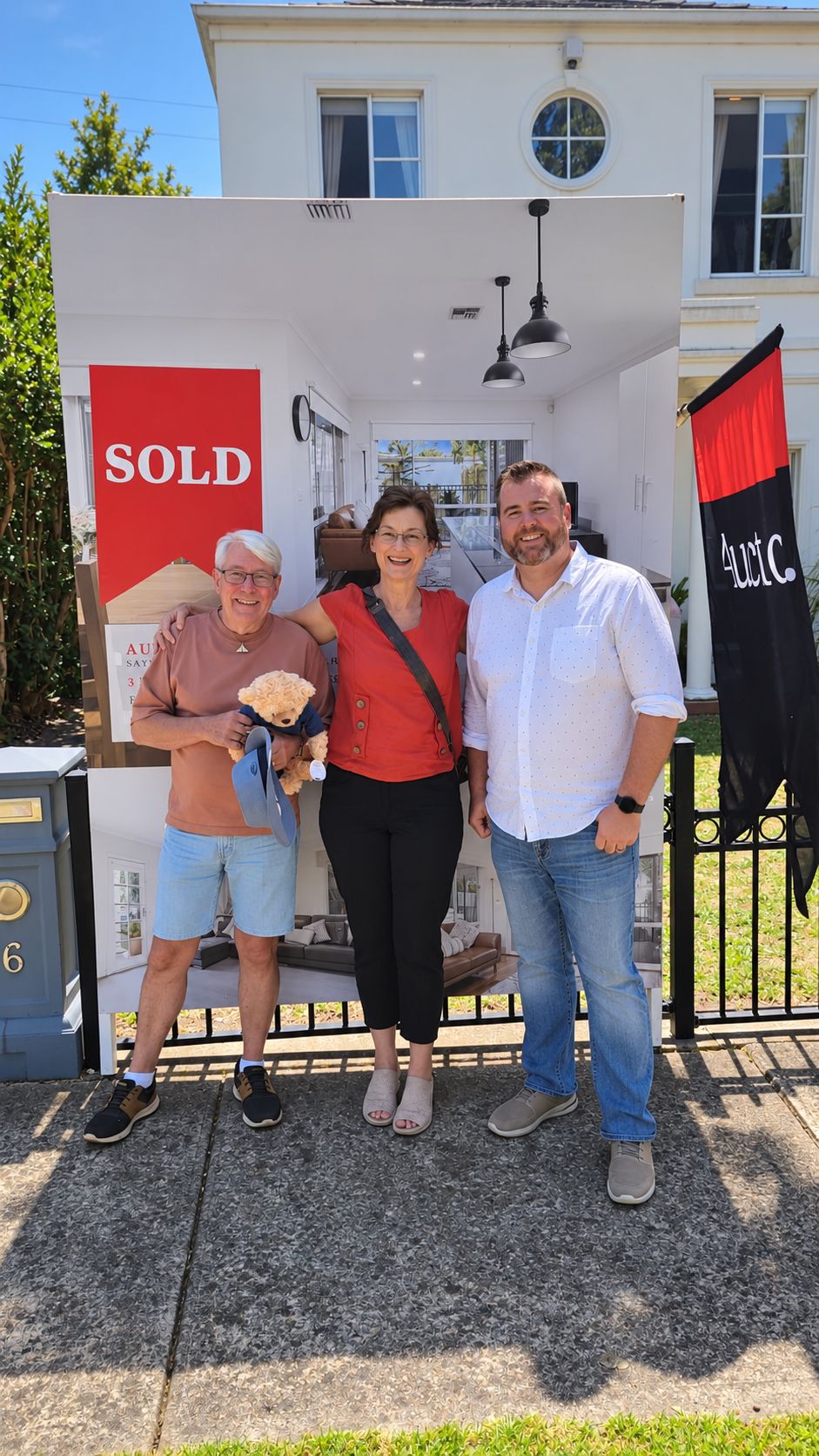
And while that's a particularly clear example of the financial value a Buyer's Advocate can provide, I think the story demonstrates something broader. Good negotiation isn't simply about being tough or making the lowest possible offer. It's about doing the work before you enter the room.
It's knowing what the property is worth. It's asking the right questions throughout the campaign. It's understanding the vendor's circumstances. It's knowing what alternatives exist. It's paying attention to what the auction itself tells you about the market. And it's knowing which pieces of information can become leverage when the negotiation begins.
Most importantly, it's about having someone in the room who isn't emotionally attached to the outcome. Philip and Eva really wanted that home. They were willing to pay $950,000 for it, and even had authority up to $970,000. But they didn't need to.
They secured the home they wanted for $900,000, because when the pressure was at its highest, we had the information, the strategy and the discipline to hold our position. That is one of the areas where an experienced Buyer's Advocate can provide very real, very measurable value.